
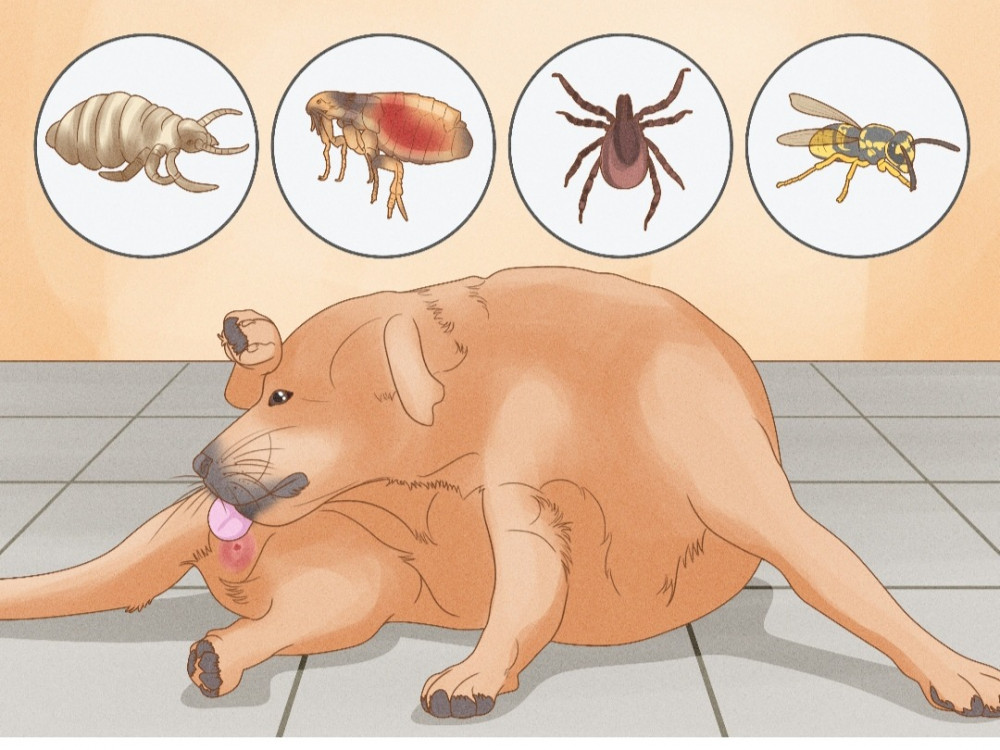
Skin problems cause a lot of discomfort in dogs, ranging from itching to pain and hair loss! Skin problems in dogs are often more prevalent during warm seasons, when seasonal allergies and other allergy symptoms are more likely
Dermatology :
1 _ fleas
Dogs can pick up fleas while they are in the woods, during long walks along the trails, or even in the garden of the house. Fleas can also be transmitted from one dog to another.
It is best to use a flea spray to keep fleas away from your dog
While the fleas themselves can bother your dog, it's their droppings and bites that cause itchy and irritated skin.
Fleas like to stay at the base of the ears, but this does not prevent them from being present anywhere in the dog's fur.
You can check your dog for fleas by looking closely at the fur. In addition to the insects themselves, you may notice flea droppings, which look like specks of black pepper or dirt.
One trick for detecting fleas is to brush your dog on a white floor. You can also moisten any visible small spots with a little water. If the spots turn red, it could be a sign of flea feces.
Fleas can be treated and prevented with several over-the-counter options.
Or from halal sprays to remove fleas or topical solutions
2. ticks
Like fleas, ticks are small, pesky insects that feed on their canine hosts. They can cause irritation and transmit Lyme disease as well as other bacterial infections.
You can detect ticks on your dog with the naked eye. To remove it properly, grab the tick with tweezers close to the dog's skin, and gently pull it straight out. Twisting or pulling too hard can cause the head to remain in the dog's skin, which can lead to infection.
If you are not sure how to get rid of ticks, talk to your veterinarian about the appropriate technique. You can also ask about safe tick prevention products. Like a tick protection drop
3_ dry skin
Dry skin is one of the most common canine skin conditions! You can tell if your dog has dry skin by parting the fur and checking if the skin is scaly. You may also notice redness and inflammation.
There are a range of causes of dry skin including:
• Environment: Your dog may be more prone to dry skin in areas with low humidity, and it can be a more common problem in the winter.
• Allergies: Allergic reactions to shampoos, perfumes or other allergens can also cause dry skin in dogs.
• Dehydration: If your dog does not get enough water during the day, dehydration may begin to appear on his skin. The solution is to make sure your dog has clean water available at all times, and be sure to take plenty of fresh water on long walks with your dog.
Some commercial dog foods process healthy oils that can help promote healthy skin and coat. Be sure to look at the ingredient lists and talk to your vet about recommended dog food options.
4 _ skin infections
Yeast infection is one of the most common types of canine skin conditions. This type of infection often occurs around the ears or paws because the yeast loves cozy places.
If your dog has a yeast infection, you may notice him scratching at his ears and chewing at his paws in addition to irritated or discolored skin. Treatment for a yeast infection is medicated baths , ointments , or oral medications.
And you can use a vitamin that supports dermatitis
Take your dog to the vet, who will take care of each of these infections with topical solutions, medications, or other treatments.
5 _ Allergies
Dogs can have allergic reactions to many substances, including shampoos and detergents. In addition to allergies to flea bites and a variety of foods.
An allergic reaction appears as a rash, which can cause itching and irritation in the dog.
6 _. ringworm
Ringworm is a highly contagious fungus for animals and humans! The fungal infection appears as scaly, circular bald patches, often found on a dog's head, paws, ears, and front legs.
The dog's skin can also become inflamed and red due to irritation from scratching.
Contact your vet immediately if you notice any signs of irritation, who can prescribe a topical treatment to kill the fungus and prevent it from spreading
7 _ Scabies
Scabies refers to skin diseases caused by mites. The term mange is derived from the French word mangeue, which translates to “to eat or itch.” Scabies, which is caused by different types of mites, affects many types of animals, as well as humans.
There are two main types of mange in dogs:
Sarcoptic scabies: Also known as canine scabies, this disease is caused by a round-shaped, eight-legged mite called Sarcoptes scabiei. This form of scabies is highly contagious, the parasite can be transmitted from dog to dog and can be transmitted from dogs to humans, although it does not thrive on non-canine hosts. The female mite lays her eggs in the skin. The eggs hatch within three weeks and the young feed on the host's skin
According to the PetMD website for pet health, the most common symptoms of sarcoptic mange include:
1. Intense itching.
2. Redness and rash.
3. Thick yellow scales.
4. Hair loss.
5. Bacteria and yeast infections.
6. Thickening of the skin (advanced cases).
Demodectic mange (also known as red mange): This type of scabies is caused by a mite that is a normal part of the skin flora, meaning it is present in the skin naturally, and is usually harmless.
It is passed on to puppies from their mothers in the first few days after birth, but it is not contagious to humans. The mites burrow deep into the hair follicles and stay there, causing no problem.
A normal immune system keeps their numbers in check, but a dog with a weakened immune system can have mites spiraling out of control. The following are factors that put a dog at risk of demodectic mange:
Weakened immune system.
Old, sick, neglected or stray dogs.
Sick words, for example, with: cancer or diabetes.